What do the new EU anti-greenwashing laws mean for your business?
The European Union’s strict new anti-greenwashing laws are now in full effect, targeting companies making false or misleading environmental claims. Learn what the new rules cover, what they mean for your business, and how an experienced sustainability writer can help safeguard your brand.
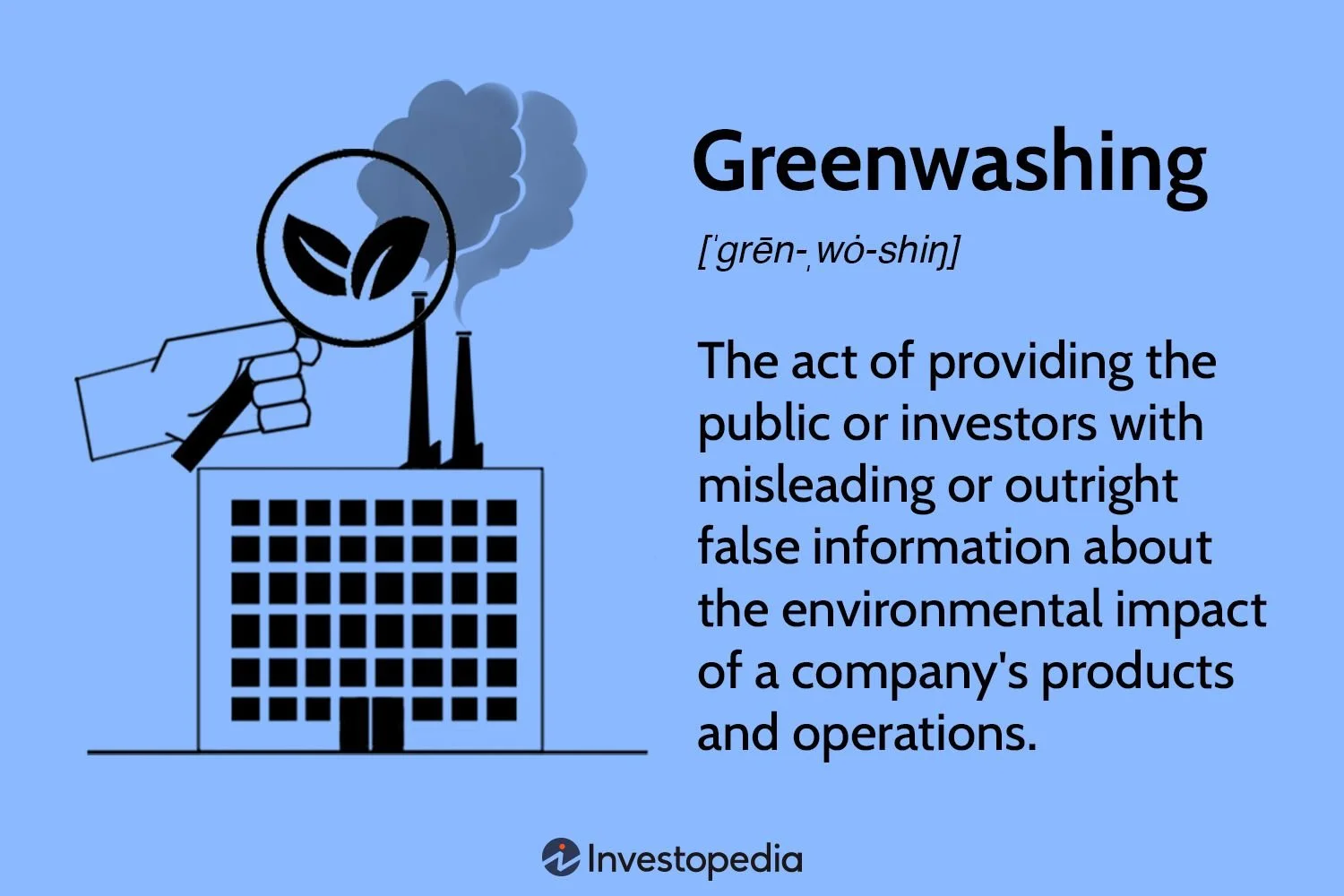
What do the EU’s new anti-greenwashing laws cover?
The Empowering Consumers for the Green Transition (ECGT) Directive – also known as EmpCo or (Directive (EU) 2024/825) – was first adopted by EU lawmakers in 2024 and officially came into effect on September 27th, 2026. There is no transition period – the rules apply right now.
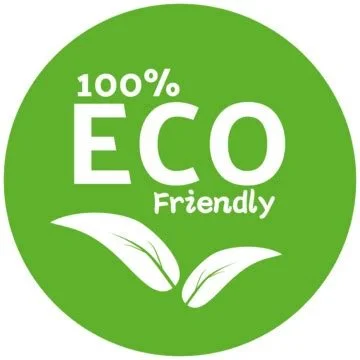
Generic and misleading labels like this are now illegal in the EU.
EmpCo applies everywhere B2C environmental claims are made, such as on packaging, product labels, websites, and advertising. The directive aims to protect consumers from companies making false or misleading environmental claims about their products, services, or operations.
The new laws have completely banned generic environmental language, self-awarded sustainability labels, dubious carbon-neutral claims, and empty promises about future performance.
Notably – and this is a big one – you can no longer claim a product has a neutral, reduced, or positive climate impact based on offsets. These long-overdue measures seek to hold companies to account and help consumers make more informed choices based on verifiable evidence.
While EmpCo’s primary focus is cracking down on companies doing the wrong thing, it also benefits those making real sustainability efforts. After all, if you’ve invested significant time and capital into reducing emissions or improving circularity, your competitors can no longer make similar claims without also putting in the effort.
Who do the new laws apply to?
The anti-greenwashing laws apply to any trader making business-to-consumer (B2C) claims within the EU, regardless of where it is headquartered or registered. For example, if a company is headquartered in the US but directly sells its products to consumers in Germany and France, EmpCo applies to all of these products and their associated advertising.
Another key point is that if an allegation is made against a company, it’s not necessary to specifically prove that anyone was misled. For instance, if a business falsely claims a product is “carbon-neutral,” it doesn’t matter whether anyone believed it or not – only that the claim was made.
As a specialist sustainability copywriter, I constantly tell my clients: if you can’t prove it, don’t say it.
Are B2B companies included in EmpCo?
Not officially, but there are many spillover effects to be aware of. For example, if your B2B company makes environmental claims about materials sold to a B2C brand and they are repeated in consumer-facing packaging, they fall under EmpCo’s scope. As a result, B2C companies are increasing the pressure on upstream suppliers to verify all sustainability claims.
There’s also the “repurposing trap.” If your sales team lifts an environmental claim out of your corporate sustainability report and uses it in a customer pitch deck, public website, product brochure, or social media post, that text is subject to EmpCo's strict greenwashing bans.
EU countries can also choose to extend EmpCo’s consumer protection laws to a B2B context, such as Germany’s Act against Unfair Competition/UWG. In addition, B2B advertising is covered by the EU’s Misleading and Comparative Advertising Directive (2006/114/EC).
Whether your company sells directly to consumers or not, EmpCo means that one way or another your sustainability claims will face far greater scrutiny.
Some examples of illegal greenwashing claims
For starters, generic terms like “green,” “environmentally friendly,” and “eco-friendly” are now completely out.
In addition, here are five practices that are now banned outright, along with relevant examples:
| Banned practice | Example | |
|---|---|---|
| 1 | Displaying a self-awarded sustainability label not based on an official certification scheme or established by a public authority. | A product cannot feature a generic “Eco-friendly wood” label, but could display an official certification from the Forest Stewardship Council (FSC). |
| 2 | Making a generic environmental claim that cannot be demonstrated by recognized excellent performance relevant to the claim. | Saying “Good for the planet” is now illegal but saying “Made with 50% renewable energy” is allowable, provided there is hard evidence to support the claim. |
| 3 | Making an environmental claim about your entire product or business when it concerns only a specific aspect of the product or business. | Products shipped in 100% recycled packaging cannot be advertised as being made from 100% recycled materials. |
| 4 | Claiming that a product or service has a neutral, reduced, or even positive climate impact based on offsets. | A company cannot claim its product is “carbon-neutral” by funding a tree-planting initiative. Instead, it must demonstrate real emissions reductions in its operations and/or value chain. |
| 5 | Advertising something as an environmental benefit when it is already required by law. | A company cannot promote its baby bottles are “BPA-free” when BPA is already prohibited in this product category. |
Strict new rules about pledges of future performance
Extraordinary promises now require extraordinary evidence. For example, claims like “climate-neutral by 2040” (which I literally saw yesterday on the side of a giant fuel silo) are illegal unless they are:
supported by clear, transparent, and verifiable commitments, and
backed by a detailed and realistic implementation plan with measurable, time-bound targets, and
regularly verified by an independent third-party who makes the results publicly available.
What are the penalties for breaking the rules?
If you think the EU’s anti-greenwashing laws are all bark and no bite – think again. Depending on the seriousness, scale, and location of the claims, EU member states can take the following actions:
Fines and penalties: For the most egregious violations, companies will be fined at least 4% of their annual turnover (or at least €2 million if this data is unavailable), and in France, Belgium, and the Netherlands, this figure can be up to 10%.
Corrective actions: Authorities and courts can order traders to stop or withdraw claims and publish corrective statements at their own cost.
Consumer restitution: Consumers harmed by unfair claims may be entitled to compensation, price reductions, or contract terminations. Representative bodies can also launch class-action lawsuits on behalf of collective consumer groups.
Even before EmpCo came into effect, EU countries were coming down hard on fraudulent green claims. For example, the Italian Competition and Markets Authority slapped an €8 million fine on GLS Italy for promoting “climate-positive” delivery without adequate evidence, including questionable offsets.
In France, the DGCCRF hit online giant SHEIN with a €40 million fine for “deceptive commercial practices,” including making false or vague sustainability claims and an unverifiable public commitment to cut greenhouse gas emissions by 25%.
Along with potentially large fines like these, companies violating anti-greenwashing rules also face negative publicity, damage to their reputation, and a loss of consumer trust.
Which practices and environmental claims are still allowed?
In a nutshell, virtually all claims are allowed as long as they’re supported by evidence.
The following practices are still allowed, under specific conditions:
Specific, substantiated environmental claims supported by direct evidence, provided they do not extend to the entire product or business.
Certified sustainability labels based on a certification scheme with third-party monitoring, or established by a public authority.
Comparative environmental claims when the method is clearly disclosed, the comparison is between similar products, and it is objective.
Future environmental performance claims backed by a realistic implementation plan with measurable time-bound targets, verified by an independent third-party.
Emissions reduction claims based on documented reductions in the product’s or company’s own value chain, evidenced by the inventory.
How can a sustainability copywriter protect you from greenwashing?

Working with an experienced sustainability copywriter can be your own personal safety net against violating anti-greenwashing laws.
As The EcoWriter, I can help identify any false or misleading claims and ensure they’re supported with appropriate evidence. With almost 20 years of combined copywriting and renewable energy experience, I’m fluent in the language of sustainability and up-to-date with the latest anti-greenwashing laws.
I can turn your complex data, technical details, and climate ambitions into clear, engaging consumer language – without distorting or misrepresenting the truth. With anti-greenwashing laws now stricter than ever, working with a trusted sustainability copywriter can protect you from financial and reputational risks while showcasing your environmental progress.
Want the green without the wash?
If you need professional support with a website, product brochure, sustainability report, customer pitch deck, or custom project – or to write an article just like this one – contact me and together, we can maximize your impact.
You can also send me an email or fill in the form below.